

Released striped bass face higher mortality during the hottest days
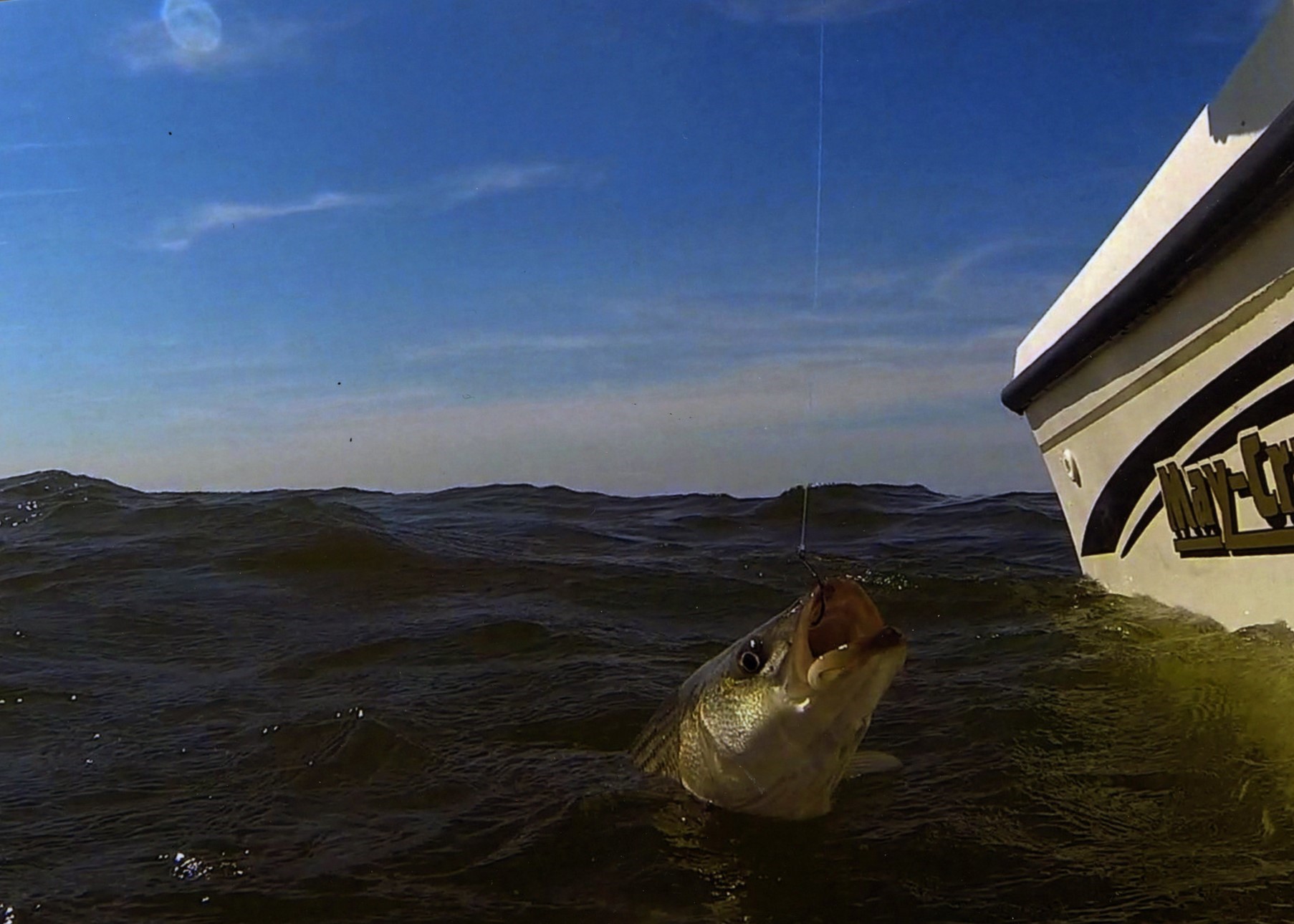
A striped bass in the water. Photo by Roy Julie, submitted to the 2014 Maryland Natural Resources photo contest
Practicing safe catch-and-release fishing is always important for conserving fish populations, and these techniques are all the more critical for Maryland’s striped bass now, which have struggled to produce a strong new generation of fish in recent years.
Catch-and-release fishing is a great way for anglers to pursue fish while also conserving the population, allowing the fish to return to the water after the thrill of the catch. Although there is a certain amount of risk to a fish’s health anytime it is removed from the water, these risks can be minimized by following proper technique and the latest science.
To give hooked stripers the best chance of swimming another day, anglers should use the right equipment, limit the amount of time the fish is out of the water, and avoid fishing on the hottest days.
Studies have found that using circle hooks leads to less mortality in striped bass, while more severe injuries occur when using J hooks. Maryland regulations require that anglers use non-offset circle hooks when fishing for striped bass. Lures with single hooks rather than treble hooks can be removed more easily and cause less damage.
DNR also recommends that catch-and-release anglers use rubber or soft mesh landing nets, as well as dehookers and lip-gripping devices, to assist in dehooking but not for bearing the weight of a fish. Large fish should be cradled horizontally to support internal organs, and not held vertically or with hands in the gills. Wet gloves are important when handling a fish to avoid harming its protective coating. Fisheries managers urge anglers to be prepared to remove the hook and if they want a picture, take it quickly — in less than a minute—before releasing the fish. However, the best option is to not remove striped bass from the water at all.
That’s because another major risk factor for caught-and-released fish is simply the exposure to the air. When a fish—which may be exhausted from fighting the line—is pulled into the air, it’s a shock to their system that can cause stress and respiratory damage.
A 2025 University of Massachusetts Amherst study that analyzed the post-release activity of hundreds of striped bass caught off the coast of Massachusetts found that the amount of air exposure was the most significant influence on the recovery of striped bass. The scientists recommended limiting fight time to less than 2 minutes, handling time to less than 2 minutes, and air exposure to less than 1 minute.

Fisheries managers and scientists recommend that anglers take a photo with the striped bass still in the water if possible, as air exposure can be dangerous to fish. If you remove a rockfish from the water, limit the time in the air as much as possible. Handling with a glove is also beneficial. DNR photo
In that study, all 521 fish survived within 20 minutes of release, indicating the resilience of striped bass to many catch-and-release conditions, although the scientists did not monitor the fish after that time and biologists note that fish may suffer from effects in hours or days after a catch. The fish removed from the water for two minutes or longer in the study did not fully recover during the monitoring time. These negative effects were worsened for larger fish and higher water temperatures.
Air exposure during high temperatures is particularly dangerous for striped bass and other fish. DNR asks anglers to avoid catching and releasing medium and large striped bass in water warmer than 80 degrees and in air temperatures warmer than 95 degrees. In the summer, the department posts a Striped Bass Fishing Advisory Forecast to make recommendations for safe angling based on temperature conditions. Anglers should also keep up to date on striped bass regulations in the state.
The department is also considering a seasonal shift for striped bass in Maryland, which would open April to catch-and-release fishing, when temperatures are more mild and safe catch-and-release can be practiced, and would close the full month of August instead of the end of July. DNR scientists hope that this change would best protect striped bass when they are most vulnerable, during the hot, final weeks of the summer.
Management efforts have focused on protecting the mature, adult fish, so that they can support a successful spawning year when the conditions are right. Fisheries managers, anglers, and the Chesapeake Bay community are still waiting for those right environmental conditions to hit, and scientists are continuing to explore the reasons behind the poor spawning success.
But in the meantime, there are ways that anglers can help to protect the large rockfish that will give birth to the next generation of the iconic state fish. Maryland’s striped bass are a communal resource. By practicing safe catch-and-release fishing and avoiding fishing during the hottest periods, anglers can contribute to the effort to protect striped bass so that future generations can also benefit from this important species.
By Joe Zimmermann, science writer with the Maryland Department of Natural Resources.
